Most duct cleaning quotes are written before anyone has looked inside the system. A proper inspection takes about an hour and covers four areas, in the order the air travels.
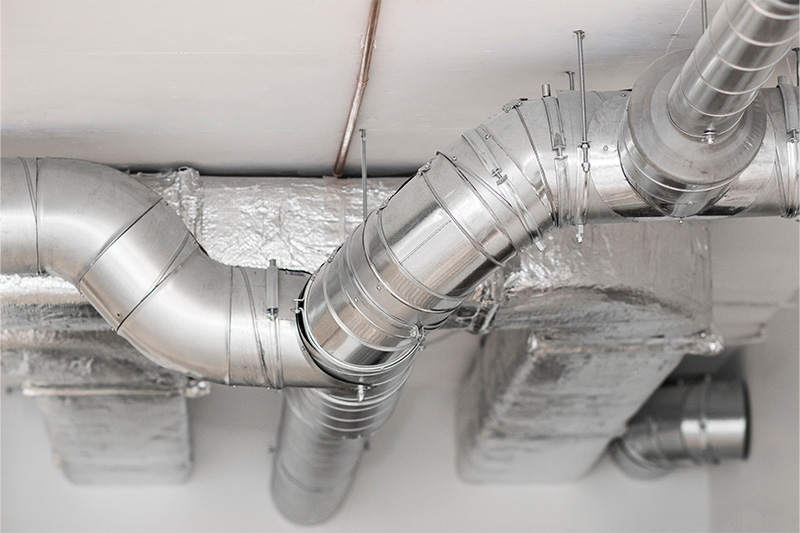
1. The ducts, grilles and registers
This is the part homeowners picture, and it is the easiest to see. We put a camera up a duct and show you what is in there. We count the supply registers and return grilles, note whether the duct is metal, flex or duct board, and check whether the registers are dirty or
painted over.
Here is something worth knowing before you spend money: a light film of dry dust inside a duct is normal and does not necessarily require cleaning. That is the industry standard's own position. What matters is accumulation, debris, and evidence of growth.
2. The plenums
The plenums are the two large boxes at the equipment, one where return air comes in and one where supply air goes out. Nearly every home in this area has them built from fiberglass duct board rather than sheet metal, and they are where problems usually begin.
The reason is moisture. The surfaces closest to the coil stay damp when the system runs. Damp plus dust is what growth needs. Duct board is porous, so anything growing in it is in the material, not on it — which is why the standard says it gets replaced rather than cleaned. Sheet metal can be washed; fiberglass cannot.
We also look for air leaks at the seams. A return plenum in a garage or attic that is pulling unconditioned air is bringing that air into your house with every cycle.
3. The equipment
We measure static pressure, which is the air pressure moving through the system, and the drop across the coil specifically. That number tells us whether airflow is restricted and roughly where. A coil can look acceptable and still be loaded on the side facing away from
you.
Then we open the cabinet and look at the blower wheel, the coil face, the drain pan and the drain line. A blower wheel packed with dirt moves less air and reseeds everything downstream of it. A drain pan holding sludge is usually the single dirtiest thing in the
system, and it sits directly in the airstream.
We also check the secondary drain pan, the one underneath an attic unit. It is the only thing between a drain failure and your ceiling, and a rusted-out pan is not doing that job.
4. Prevention
The last part is what is missing. A condensate safety switch. A proper filter. UV where it would actually help, which means aimed at the coil and the pan rather than mounted wherever there was room. And on zoned systems, whether the setup is the one the
equipment was designed for.
What you get
A written report with photos, a static pressure reading before and after any work, and a flat price on anything we recommend. If the system is in good shape, we say so.
The inspection is $119, credited in full toward any work you decide to have done. It is included with a Diamond M Club or Platinum M Club membership.
One thing it is not: this is an inspection of the air side of your system. It is not a mechanical tune-up. Refrigerant, electrical and combustion checks belong to a maintenance visit, which is a separate appointment.